Is Netflix’s ‘23,000 Lives’ Based on a True Story About Mediterranean Sea Rescue

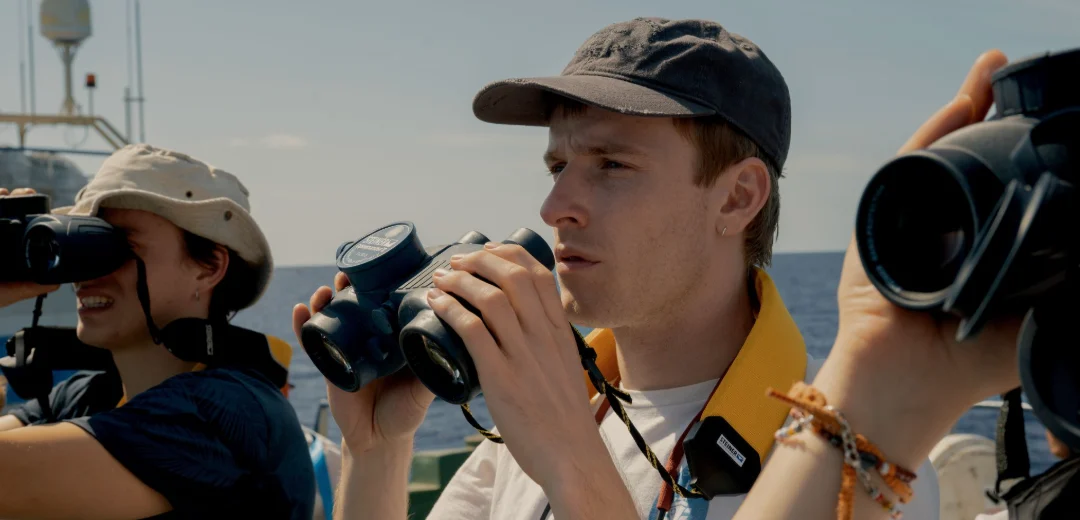

‘23,000 Lives’ arrives on Netflix on July 17, and the German drama carries the weight of a story that actually happened. The film tells the story of the search-and-rescue ship Iuventa, which operated in the central Mediterranean Sea in 2016 and 2017 before being seized by Italian authorities. That real history gives the film a starting point most fictional thrillers never get close to.
Directed by Markus Goller, the movie is titled 23.000 Leben in its original German release. The title nods to the more than 23,000 people saved by the Jugend Rettet initiative. That number is not a marketing flourish, it comes directly from the organization the film is built around.
The Real Story Behind Jugend Rettet and the Iuventa
‘23,000 Lives’ is rooted in the founding of Jugend Rettet, a German nonprofit formed by a group of young people responding to the Mediterranean migration crisis. The organization tells the story of a young group of people who decide to take action during the refugee crisis, buying an old ship and using crowdfunding to try to save the lives of refugees at sea. What began as an idealistic, grassroots effort became one of the more closely watched civilian rescue operations in Europe.
According to Jugend Rettet, the Iuventa crew took part in the rescue of more than 23,000 people over 16 missions. Other accounts of the organization’s early years cite a lower figure, with the crew honored in 2019 for saving the lives of around 14,000 people in the central Mediterranean. The discrepancy reflects the fact that the ship’s mission count grew over the full run of its operations before the vessel was taken out of service.
The film does not shy away from how quickly the mission turned into a legal fight. In August 2017, the Iuventa was lured into port by Italian authorities and seized there, with the crew investigated for facilitating unauthorized entry. Part of the crew fled on a sailboat, and the defendants who remained were confronted in court with partly fabricated evidence, including photographs allegedly showing the Iuventa towing empty boats toward the Libyan coast.
What Happened in the Iuventa Trial
The criminal case against the Iuventa crew stretched on for years and became a defining chapter in the story ‘Lives’ dramatizes. Investigations against members of Jugend Rettet, including the ship’s captain Pia Klemp, began in 2018, with the accusations of aiding illegal immigration carrying a potential prison sentence of up to 20 years. Twenty one suspects across three organizations, including Doctors Without Borders and Save the Children in addition to Jugend Rettet, were accused of aiding and abetting unauthorized entry into Italy.
The proceedings dragged on far longer than almost anyone expected. The trial became the longest and costliest criminal case ever conducted against sea rescue organisations before it finally concluded in April 2024. Twenty one refugee and human rights defenders, along with three organizations, were acquitted after seven years of legal proceedings.
The court’s reasoning mattered as much as the outcome itself. The court in Trapani, Sicily threw out the charges against all ten defendants for lack of evidence and the absence of any criminal activity, finding that the thousands of migrants rescued by the crews had entered Italy legally, meaning no crime had ever been committed. Prosecutors had been unable to find sufficient evidence that the defendants had deliberately facilitated illegal immigration or collaborated with Libyan traffickers. The ship itself did not fare as well as its crew. Years of neglect and lack of security measures during the seizure resulted in looting and significant damage to the Iuventa, prompting Jugend Rettet to pursue further legal action against Italian authorities.
Inside the ‘Lives’ Cast and Behind the Camera Team
‘23,000 Lives’ assembles a cast built around the young activists at the center of the story. Louis Hofmann stars as Lukas, alongside Maria Dragus, Mala Emde, Katharina Stark and Frederick Lau. Franka Potente also appears as Lukas’s lawyer mother, who opposes his decision to take an activist break from his own path.
The screenplay comes from Oliver Ziegenbalg, working alongside documentary filmmaker Michele Cinque, who had already explored this same history in his 2018 documentary about the Iuventa crew, and director Markus Goller, known for ’25 km/h.’ The production brings together Neue Flimmer GmbH, Sunnysideup Film GmbH and Lazy Film. Notably, the film was shot at the same offshore studios that housed productions like ‘James Bond 007, Casino Royale’ and ‘Troy.’
The film’s path to Netflix included a notable festival stop before its streaming debut. ‘23,000 Lives’ had its world premiere at Filmfest München, which ran from June 26 to July 5, 2026, screening in the festival’s Spotlight section.
Critical Reception and the Story’s Lasting Relevance
Early response to ‘Lives’ has been mixed on the question of whether the film does justice to the scale of the real events. One review argued that the attempt to fit as many stations of the nine year odyssey as possible into roughly 112 minutes results in something closer to an illustrated Wikipedia entry for much of its runtime. The same review suggested that good intentions may have worked against the film, with characters speaking to each other as though reciting talking points prepared for a media appearance.
Even critics skeptical of the film’s execution have acknowledged its timing carries weight. One reviewer noted that the trial ended in 2024, which could make the film feel a few years late, but argued that its arrival now, when the topic has largely faded from headlines, still has discussion provoking potential. That tension, between a story that legally concluded and a debate that has not gone away, sits at the center of how ‘Lives’ is being received.
The organization at the heart of the film has continued its work well past the events depicted on screen. Sea-Watch, another civilian rescue organization, noted that while the Iuventa case ended in acquittal, hundreds of people in Italy are sentenced to prison every year on the same underlying charge simply for having steered a boat while fleeing. That ongoing reality is part of why Jugend Rettet’s story continues to resonate beyond the courtroom outcome that closed its own case.
Given how closely ‘Lives’ tracks a legal battle that took seven years to resolve, viewers who watch it this week may find themselves with plenty to say about how the film balances dramatization against the real record, and that seems like exactly the kind of conversation worth having in the comments.